
-
Home

-
Blog
-
Industry News
- Glow in the Dark Anti-Slip Tape for Stairs: 2026 Low-Light Safety & B2B Sourcing Guide

Glow in the Dark Anti-Slip Tape for Stairs: 2026 Low-Light Safety & B2B Sourcing Guide
-
 author
- 23,October
 author
Stair safety is usually discussed as a traction problem. In warehouses, commercial buildings, service corridors, workshops, and other low-light areas, buyers may also want a visible reference along step edges or walking routes when normal lighting drops.
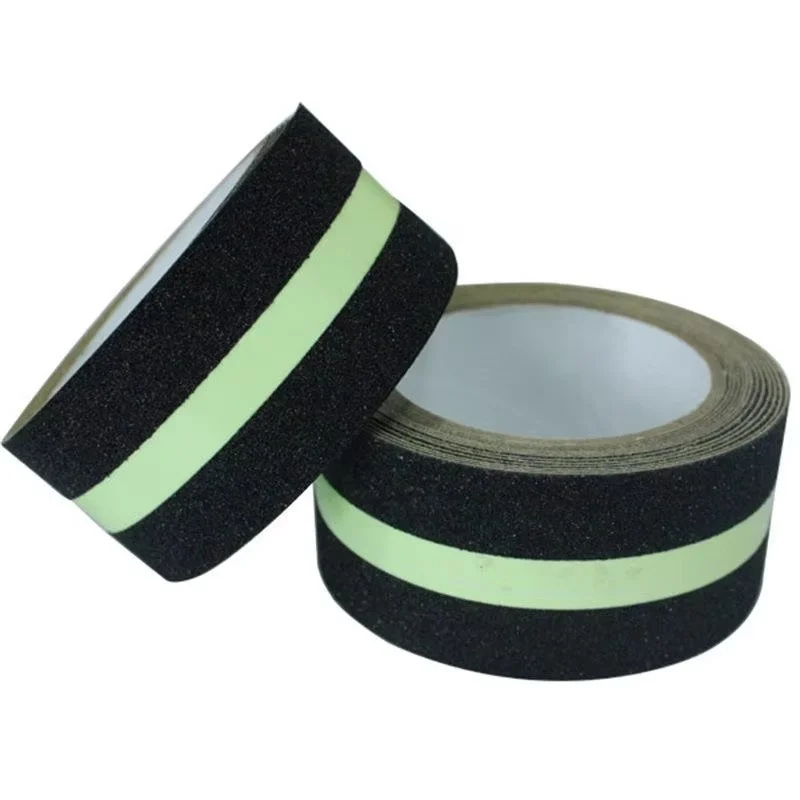
That is where glow in the dark anti slip tape serves a different job from ordinary grip tape. One installed strip combines a textured walking surface with a photoluminescent center line that develops an afterglow after suitable light exposure.
For safety-product distributors, facility suppliers, contractors, and private-label buyers, the right starting point is the actual site. HONF’s Photoluminescent Anti-Slip Tape is designed for compatible stairs, ramps, platforms, thresholds, walkways, and facility routes where both grip and a low-light visual reference are useful.
Product Function and Photoluminescent Operating Principle
“Glow,” “reflective,” and “anti-slip” often appear in the same search results, but they describe different functions. For a B2B buyer comparing anti slip tape for stairs, this distinction matters before samples are even requested. The product has to match the visibility problem as well as the walking surface. Otherwise, two suppliers may quote products that look similar in a catalog but work on completely different principles.
How Photoluminescent Afterglow Develops After Light Exposure
Photoluminescent material absorbs energy while exposed to light and releases part of that energy as visible afterglow when the surroundings become darker.
The site lighting matters. So do exposure time, the photoluminescent material, viewing conditions, and the surrounding environment. For procurement, the useful question is not simply “How many hours does it glow?” but whether the production sample gives the required visual reference after exposure to the lighting actually available at the installation point.
Photoluminescent vs Reflective and Standard Anti-Slip Tape
Standard anti-slip tape is mainly selected for traction. Reflective tape returns incoming light from headlights, flashlights, or other sources. Photoluminescent tape works after prior light exposure and does not depend on a beam being directed at it at the moment of viewing.
Where reflected-light visibility is the real requirement, HONF’s Microprismatic Reflective Tape belongs in a different specification.
Dual Performance Requirements for Stairs and Low-Light Routes
A photoluminescent anti slip tape should be approved on two separate performance tracks. Strong afterglow does not establish traction, and an aggressive grip surface does not establish useful low-light visibility. Separating the two makes supplier comparisons clearer and gives purchasing and QC teams something they can repeat on a later shipment.
Traction Performance on Stair Treads and Step Edges
HONF uses quartz sand and PVC for the textured walking surface, with an oil-based adhesive for bonding to compatible clean and dry substrates.
For stairs, test the strip where people actually place their feet. Review grip, edge lifting, surface condition, cleaning routine, and wear under normal traffic. A clean showroom tile is not a substitute for the service stair the product will eventually sit on.
For distributors comparing photoluminescent stair tape, the traction requirement should be written separately from the afterglow requirement.
Afterglow Visibility Under Reduced-Light Conditions
Charge the sample under the lighting normally available at the site, then reduce the light and check it from the intended approach direction.
For glow in the dark stair tape, viewing angle matters. A bright strip seen from 30 cm away does not tell a facility buyer how the stair edge will appear several steps ahead. Define the observation point before comparing samples.
2026 Facility Resilience Planning and Low-Light Route Visibility
Low-light circulation has gained more attention as organizations review continuity planning in 2026. Singapore’s Exercise SG Ready 2026 explicitly focused on prolonged power outages and degraded digital connectivity, with about 1,000 organizations, schools, and units involved in preparedness activities. The European Commission also issued non-binding guidance in July 2026 on strengthening critical-infrastructure resilience against disruptive incidents.
These developments do not prescribe a tape product. They do explain why facility teams are taking another look at how stairs and routes remain usable when normal systems are disrupted.
Where Low-Light Wayfinding Fits Into a Broader Safety Plan
Photoluminescent anti-slip tape is one part of a wider site strategy. Emergency lighting, signs, route design, local requirements, and other safety systems remain separate considerations.
Once a low-light requirement is identified, the buying decision returns to measurable conditions: available charging light, substrate, traffic, cleaning, adhesion, and the afterglow expected from the installed strip.
Charging Conditions and Afterglow Qualification
“Glow in the dark” is not a complete purchasing specification. A sample exposed to a bright desk lamp can behave differently from the same product installed in a dim internal stairwell. Buyers need a repeatable charging and observation method if they want meaningful comparisons between suppliers or between production lots.
Light Source and Charging Exposure
Use the expected site lighting whenever possible. Keep exposure time consistent between samples and record when the afterglow is checked.
HONF’s center strip stores light and develops an afterglow after suitable charging exposure. Brightness and duration vary with the final photoluminescent material and environment.
For projects with defined photoluminescent criteria, put those requirements into the RFQ and review supporting data for the exact production grade.
Why Generic Glow-Time Claims Are Not Enough
A claim such as “glows for X hours” has limited purchasing value unless the charging method and observation conditions are known.
For a practical B2B comparison, define:
- the charging light;
- exposure time;
- when the sample is checked after lights are reduced;
- expected viewing distance;
- surrounding light conditions.
That turns a showroom impression into a repeatable acceptance check.
Photoluminescent Center-Strip Design and Format Selection
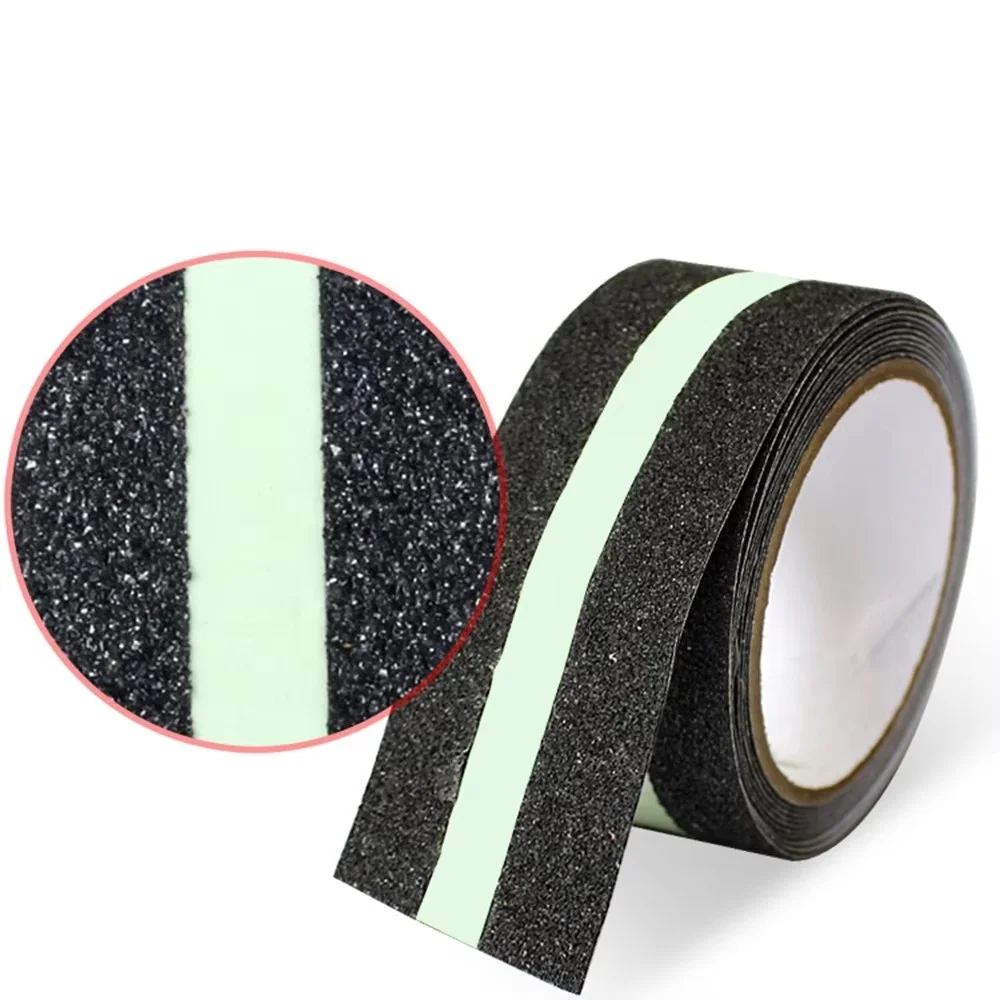
HONF uses a photoluminescent strip through the center of the textured tape rather than treating the whole surface as one generic glow area. This gives buyers two dimensions to specify: overall grip width and center-strip width. It also makes SKU control easier for distributors handling several safety-tape formats.
Selecting 6 mm or 12 mm Center-Strip Widths
The standard HONF construction is 50 mm wide and 0.6 mm thick, supplied in 5 m rolls. The center strip is available in 6 mm or 12 mm widths.
A wider glow strip is not automatically the better choice. Compare the finished installation, viewing distance, stair geometry, and available grip area before setting the specification.
Keep Grip and Visual Reference as Separate Acceptance Criteria
Record both results during sample approval.
One format may fit the stair geometry well but need a different center-strip width. Another may look more prominent but offer no practical advantage for the actual viewing condition. Keeping those observations separate helps the buyer choose the format for the job rather than by appearance alone.
Surface Compatibility and Pre-Purchase Performance Qualification
Adhesion can vary just as much as afterglow. Surface texture, coatings, contamination, moisture, and age all affect the bond. This is why anti slip tape for stairs should be sampled on the real substrate before a distributor commits to a bulk program or prints broad application claims on private-label packaging.
Concrete, Metal, Tile and Sealed Surfaces
HONF’s photoluminescent tape can be evaluated on clean, dry, stable concrete, metal, tile, sealed wood, painted floors, PVC, and other compatible surfaces after a small adhesion test.
Where low-light visibility is not required, buyers can compare the application with HONF PVC Anti-Slip Tape and keep standard grip applications separate from photoluminescent ones.
Remove dust, oil, water, loose coatings, and cleaning residue before the trial. Press the full strip and edges firmly, then review the installation under realistic traffic.
Use a Qualification Matrix Before Bulk Approval
A compact matrix gives procurement, QC, and the supplier the same reference.
| Qualification area | Buyer acceptance check |
| Traction | Grip under intended footwear and traffic |
| Adhesion | Initial bond, dwell and edge lifting |
| Photoluminescence | Charging response and afterglow visibility |
| Wear resistance | Abrasion after normal traffic and cleaning |
| Environment | Water and expected service conditions |
| Format | Overall width, center strip and roll handling |
Retain an approved production-grade sample once the tape passes. It becomes the physical reference for repeat orders.
B2B Sourcing and RFQ Requirements
After performance is settled, sourcing becomes a specification exercise. A photoluminescent anti slip tape manufacturer needs a clear project brief rather than a request for “the strongest glow tape.” Buyers should define the application, surface, lighting, traffic, dimensions, and packaging before comparing quotations.
For a broader safety assortment, HONF’s Floor Marking & Road Safety Tape range provides adjacent grip, marking, and visibility products without treating them as interchangeable.
Production Samples, Custom Formats and Private-Label Programs
A useful RFQ should state the target surface, stair/ramp/walkway application, available charging light, expected low-light condition, width, center-strip preference, sample quantity, order volume, destination, and private-label needs.
HONF can review custom widths, center-strip dimensions, thickness constructions, roll lengths, and packaging formats for qualifying volume orders.
Approve the physical construction before final artwork. It is much easier to build a repeatable retail or distributor SKU once the tape itself is fixed.
Conclusion
Glow in the dark anti slip tape is most useful when buyers need two functions from the same installed strip: traction on a compatible walking surface and a photoluminescent reference after suitable light exposure.
The strongest buying process is simple: qualify traction and afterglow separately, test the actual substrate and lighting conditions, then retain the approved sample for repeat orders.
For samples, custom formats, private-label programs, or a bulk quotation, use the HONF contact and quotation page with your application, surface, quantity, destination, and packaging requirements.
FAQs
Q1: How does glow in the dark anti-slip tape work?
A: The textured surface provides the grip function. The photoluminescent element absorbs energy during light exposure and releases it as afterglow when the surrounding light level falls.
Q2: Does glow in the dark tape need light to charge?
A: Yes. Photoluminescent material needs prior light exposure. For a B2B project, test the production sample under the lighting expected at the installation site.
Q3: How long does photoluminescent tape glow?
A: Glow duration depends on the photoluminescent material, charging exposure, environment, and the point at which brightness is evaluated. Use a repeatable site-relevant test rather than a generic duration claim.
Q4: Is photoluminescent tape the same as reflective tape?
A: No. Photoluminescent tape develops afterglow after light exposure, while reflective tape returns light from an external source.
Q5: What surfaces can glow in the dark anti-slip tape be used on?
A: HONF’s product can be evaluated on clean, dry, stable concrete, metal, tile, sealed wood, painted floors, PVC, and other compatible surfaces. Test adhesion on the actual substrate before a full installation or bulk order.
Recent Post



Related Products
Best-selling Products
Kraft Masking Film Manufacturer
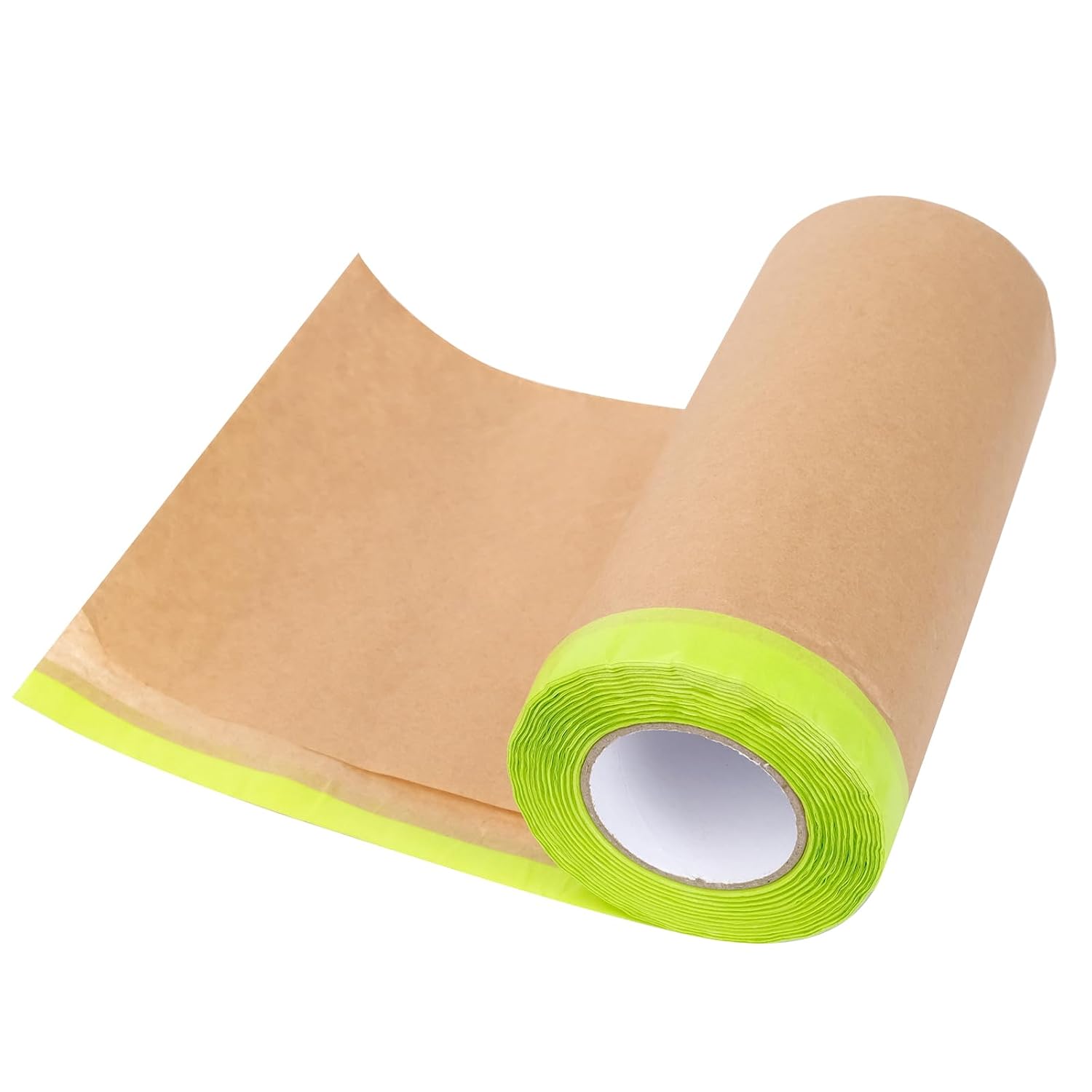
Kraft Masking Film is a protective masking material made from kraft paper, often with an adhesive edge for quick application. It helps shield floors, walls, furniture, and other surfaces from paint, dust, dirt, and overspray during decorating, renovation, and construction work. It is easy to use, cut, and remove after the job is complete.
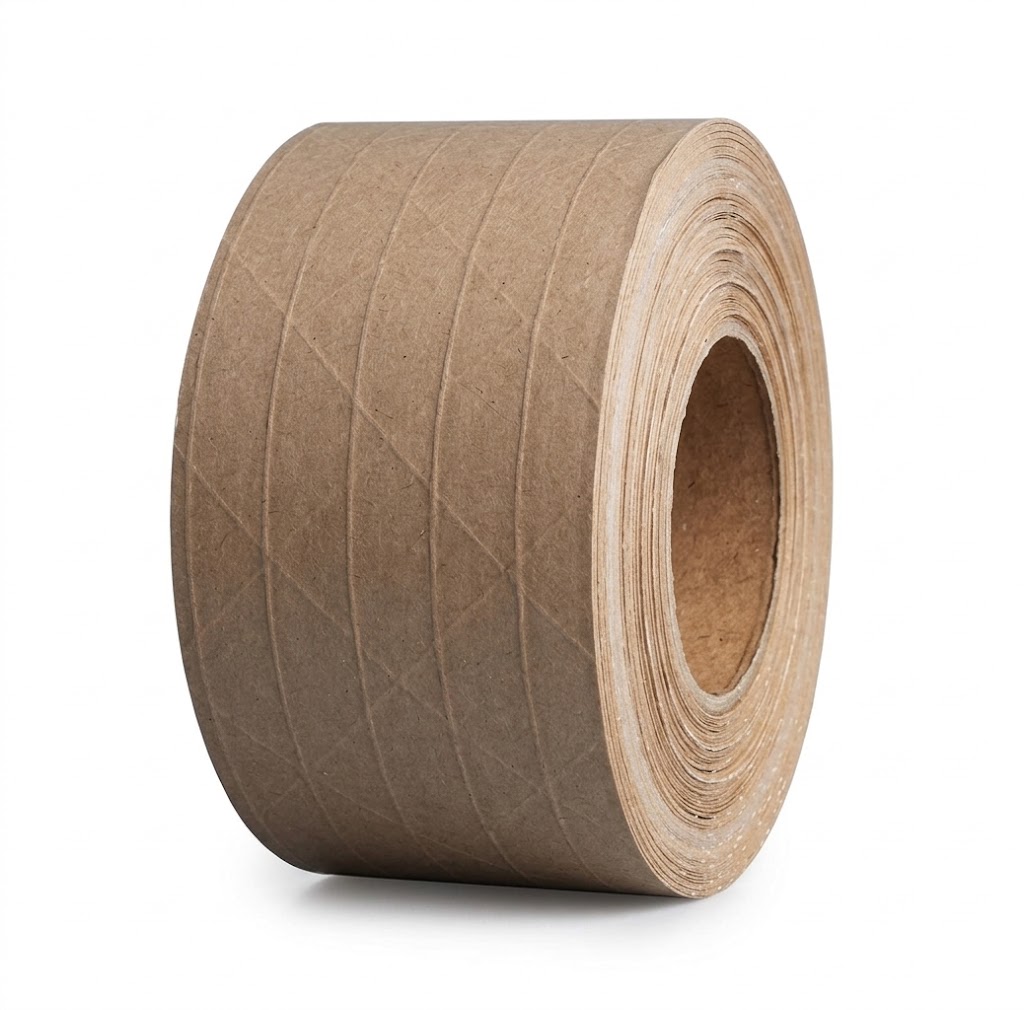
Reinforced Water-Activated Kraft Paper Tape Manufacturer
Reinforced Water-Activated Kraft Paper Tape is made from durable kraft paper reinforced with strong fibers and activated by water. It provides excellent adhesion, high tensile strength, and tamper-evident sealing, making it ideal for sealing cartons, heavy-duty packaging, and shipping boxes.
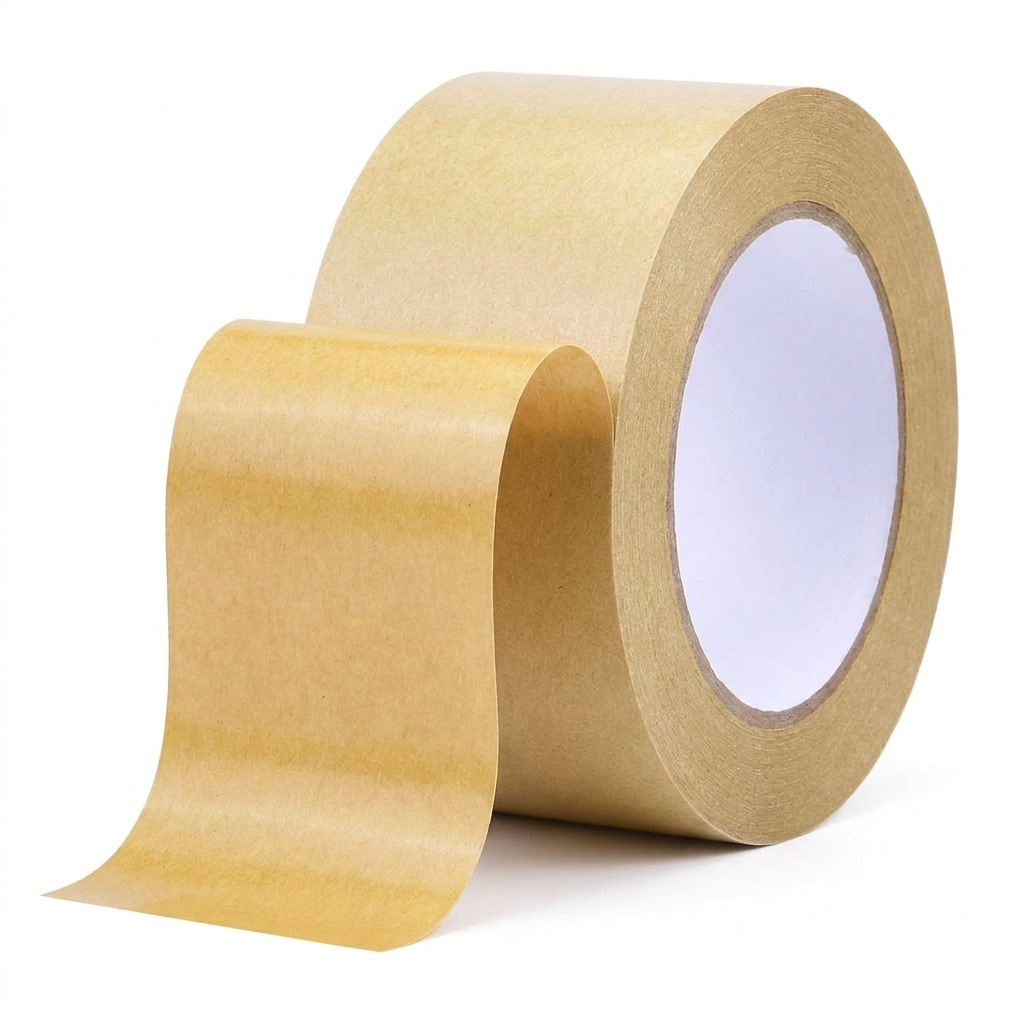
PE Self-Adhesive Kraft Paper Tape Manufacturer
PE Self-Adhesive Kraft Paper Tape is made from durable kraft paper laminated with a PE coating and a strong pressure-sensitive adhesive. It offers moisture resistance, excellent tear strength, and reliable adhesion, making it ideal for carton sealing, packaging, bundling, labeling, and general industrial use.
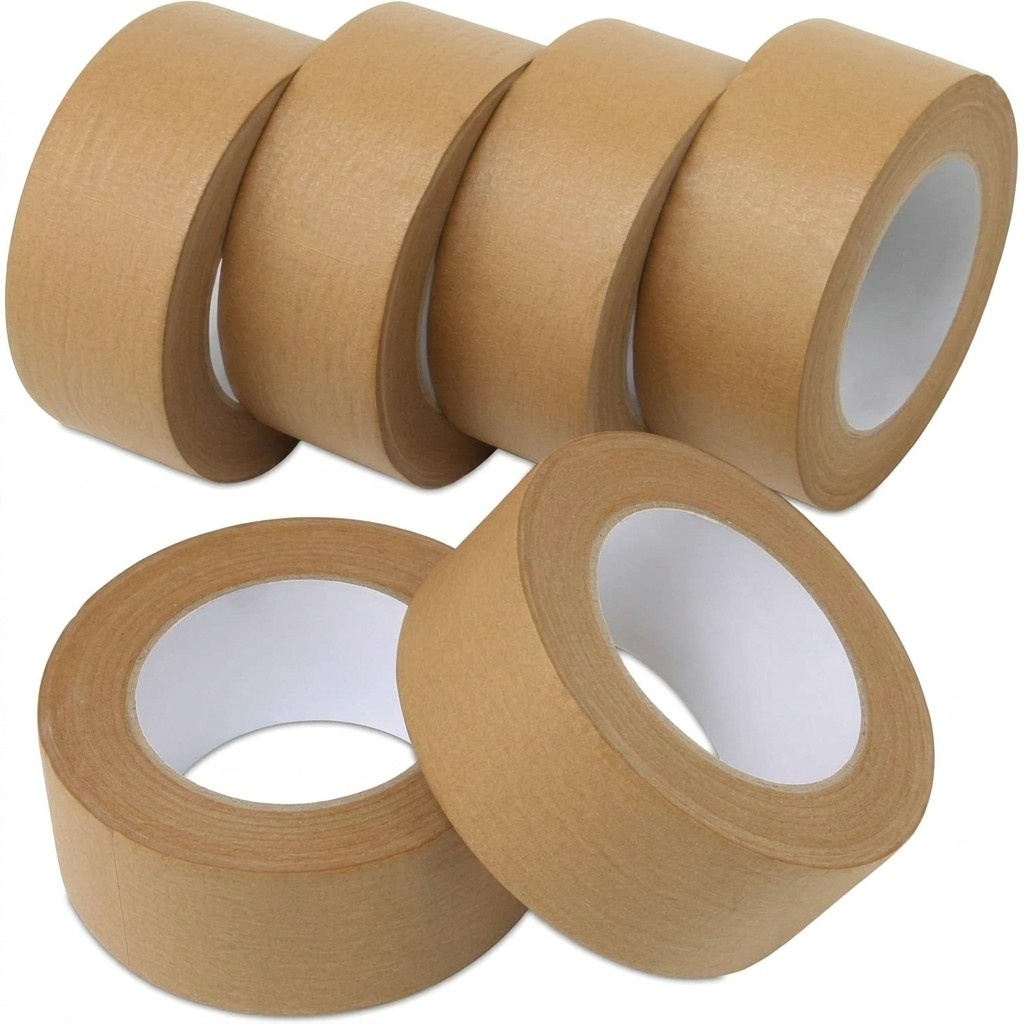
Kraft Paper Tape Manufacturer
Kraft Paper Tape is an eco-friendly adhesive tape made from durable kraft paper. It provides strong adhesion, easy tearability, and reliable sealing performance, making it ideal for carton sealing, packaging, labeling, crafts, and general office use.
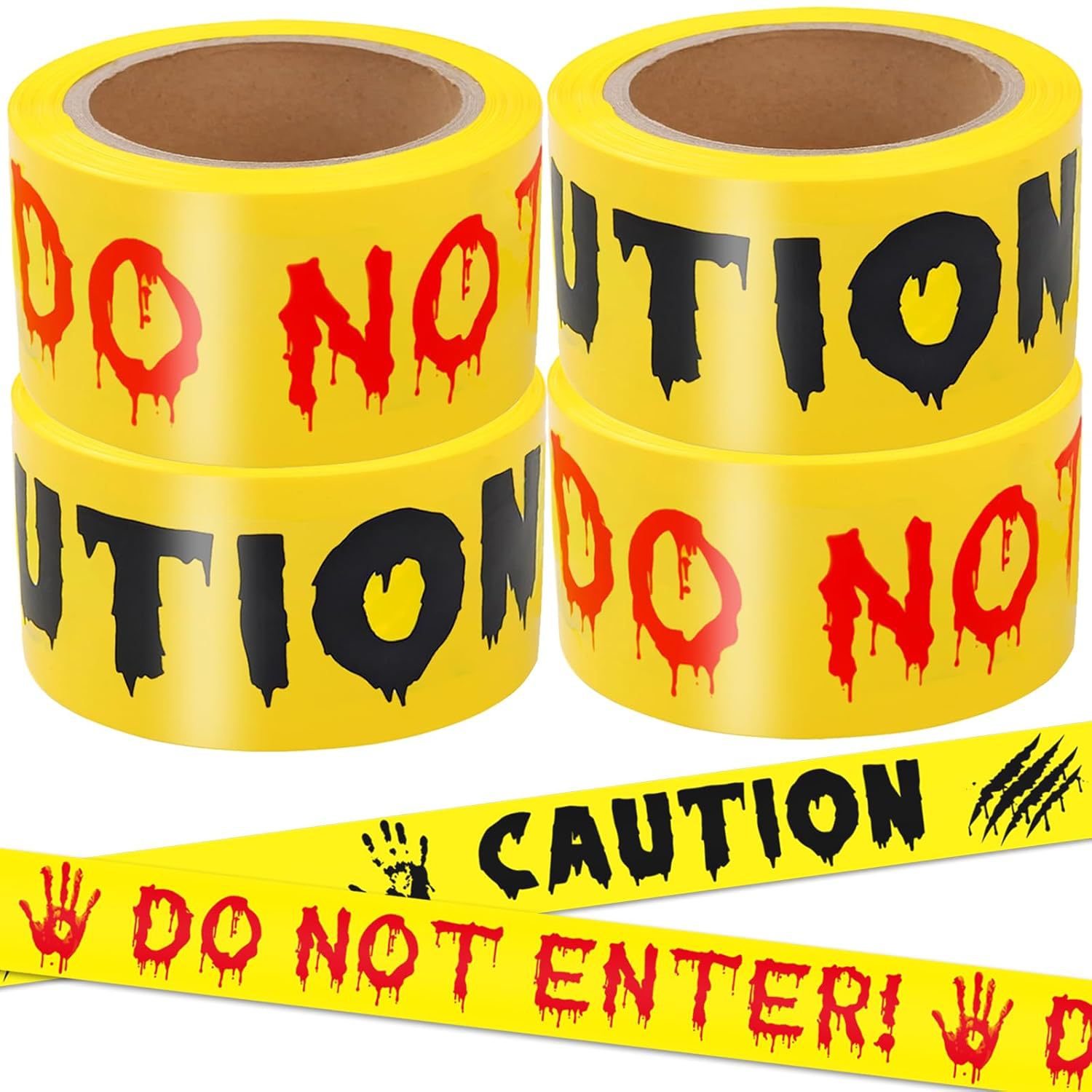
Halloween Caution Tape Manufacturer
Halloween Caution Tape is a festive decorative tape featuring spooky Halloween designs and caution-style lettering. It is ideal for decorating parties, haunted houses, windows, doors, yards, and event spaces, creating a fun and eye-catching atmosphere.
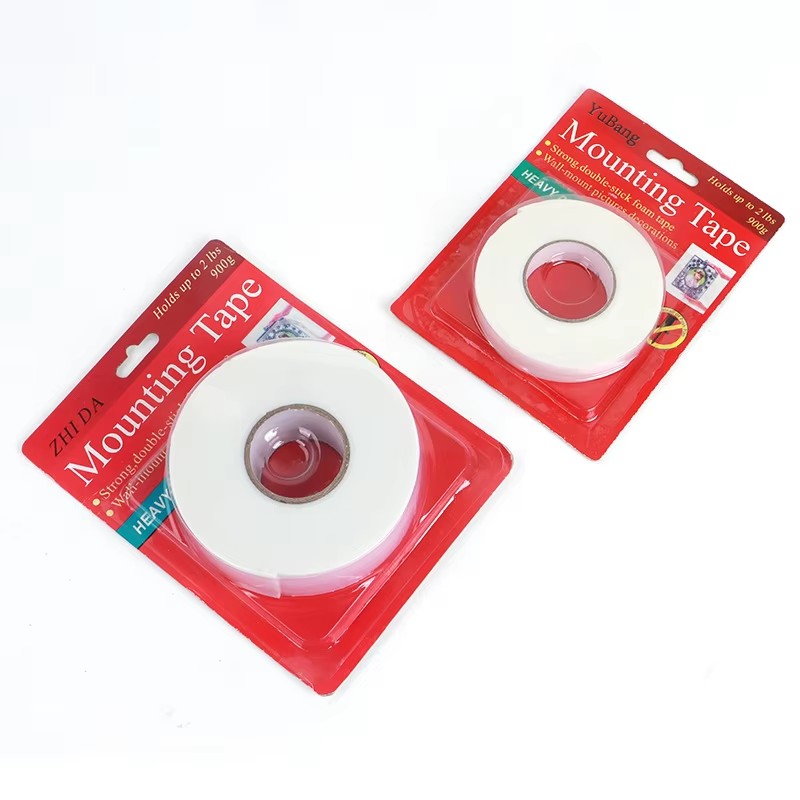
Mounting Tape Manufacturer
Mounting Tape is a strong double-sided adhesive tape designed for securely mounting and fixing items without screws or nails. It provides excellent adhesion, durability, and easy application, making it ideal for signs, decorations, hooks, frames, mirrors, and household or office accessories.